For homeowners in Monroe, NC, and surrounding areas like South Charlotte, Matthews, and Indian Trail, effective yard drainage is crucial. Heavy rainfall and the dense North Carolina clay soil can lead to standing water, backyard drainage problems, and even water pooling near your foundation. A well-installed French drain can be a simple yet highly effective solution to these issues. In this comprehensive guide, we’ll walk you through a step-by-step approach to installing a French drain, focusing on common pitfalls and best practices so you can achieve optimal results.
Why Consider a French Drain?
Before diving into the installation process, it’s important to understand why a French drain might be the best choice for your yard. French drains are designed to redirect water away from problem areas, such as the foundation of your house or low spots in your yard where water tends to collect. This type of drainage system is particularly effective for managing stormwater runoff in areas with poor soil drainage characteristics, like North Carolina clay soil.
Benefits of French Drains
- Prevention of Water Damage: By channeling water away from your home, French drains help prevent costly water damage to your foundation.
- Improved Yard Usability: Eliminate soggy areas in your yard, allowing for more usable outdoor space.
- Erosion Control: Reduce soil erosion in sloped areas and protect your landscaping investments.
When to Consider Professional Help
While a French drain installation can be a DIY project, complex yard layouts or severe drainage issues may require the expertise of a professional landscaper. D & L Landscape Pros, a trusted landscaping company in Monroe, NC, offers specialized drainage solutions and can ensure your yard drainage problems are addressed efficiently.
Planning Your French Drain Installation
A carefully planned French drain installation is critical for success. Homeowners should conduct a thorough assessment of their property to determine the best location for the drain. Consider the following steps when planning your installation:
Identify Problem Areas
Begin by identifying where water accumulates in your yard. Common areas include the base of slopes, near gutters, and around foundations. Understanding these trouble spots will guide you in determining the most effective placement for your French drain.
Mapping Out the Drain Path
Plan the path your French drain will take. Ideally, the drain should extend from the highest point of the problem area to a location where water can safely exit, such as a storm drain or a dry well. Keep in mind the natural slope of your yard to facilitate gravity-led drainage.
Gathering Materials and Tools
Once your plan is in place, gather the necessary materials and tools for your French drain installation. Proper preparation will make the process smoother and more efficient.
Materials Needed
- PVC or Corrugated Pipe: Both 4-inch perforated and solid pipes are required to carry water away.
- Gravel: Use clean, washed gravel to fill the trench and facilitate water flow.
- Landscape Fabric: This prevents soil from clogging the drain.
- Shovel and Pickaxe: Essential for digging the trench.
Additional Tools
- Level: Ensures the trench has a consistent slope.
- Wheelbarrow: Useful for transporting gravel and soil.
- Measuring Tape: For accurate measurement of trench depth and length.
Step-by-Step Installation Process
With your materials and tools ready, it’s time to begin the installation. Follow these detailed steps to ensure a successful French drain installation:
Step 1: Digging the Trench
Start by digging a trench approximately 18 inches deep and 9 to 12 inches wide. Ensure the trench slopes away from your home’s foundation at a rate of about 1 inch per 10 feet. This gradient is crucial for effective drainage.
Step 2: Lining the Trench
Line the trench with landscape fabric, allowing excess fabric to extend beyond the trench edges. This fabric will help prevent soil from clogging the drainage pipe and gravel fill.
Step 3: Placing the Gravel Base
Fill the bottom of the trench with a few inches of gravel. This creates a stable base for the drainage pipe and promotes water flow.
Step 4: Installing the Drain Pipe
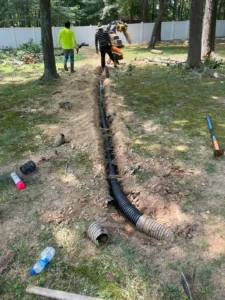
Lay the perforated pipe on top of the gravel base with the holes facing downward. Connect sections of pipe using couplings if necessary, ensuring a continuous path for water to follow.
Step 5: Covering the Pipe
Cover the pipe with additional gravel, filling the trench to within a few inches of the surface. Wrap the landscape fabric over the top of the gravel to keep debris out.
Step 6: Backfilling the Trench
Finally, backfill the trench with soil, leaving a slight depression to allow for settling. Consider adding a layer of sod or mulch to blend the drain area seamlessly into your landscape.
Common Pitfalls and Best Practices
While installing a French drain is straightforward, avoiding common mistakes can make a significant difference in the drain’s effectiveness and longevity.
Ensure Proper Slope
Without the right slope, water will not flow efficiently through the drain. Use a level to check the gradient regularly during installation, adjusting as needed.
Choosing the Right Pipe
Selecting the correct type of pipe is crucial. Perforated pipes are essential for collecting water along the trench, while solid pipes are used to transport water away.
Avoiding Clogs
Proper use of landscape fabric and regular maintenance can prevent clogs. Clear debris from the drain’s exit point and inspect for blockages periodically.
For more comprehensive drainage solutions, visit D & L Landscape Pros’ guide on fixing soggy yards and preventing yard damage.
When to Call a Professional
If you encounter complex drainage issues or lack the tools and expertise required for a DIY project, it may be wise to consult with a professional. D & L Landscape Pros, a reputable landscaper in Monroe, NC, offers specialized yard drainage solutions, including French drain installation, retaining wall construction, and erosion control strategies tailored to the unique challenges of North Carolina’s soil and weather conditions.
Learn more about their professional yard drainage solutions and standing water solutions.
Conclusion
Effective yard drainage is key to maintaining a healthy and attractive landscape in Monroe, NC, and surrounding areas. By understanding the process and best practices for French drain installation, you can protect your property from water damage, enhance curb appeal, and create more enjoyable outdoor living spaces. For those looking for expert assistance, D & L Landscape Pros is your go-to resource for all your landscaping and drainage needs in South Charlotte and beyond. Visit D & L Landscape Pros to explore professional solutions tailored to your property.