If you’re watering your lawn consistently but still seeing brown, thinning, or completely dead patches, you’re not alone. Homeowners across Monroe, South Charlotte, Matthews, and Waxhaw often ask the same question: why is my grass dying in patches even though I’m doing everything right?
The truth is, patchy lawns are rarely caused by watering alone. In North Carolina, underlying issues like soil conditions, grading, and drainage often play a much bigger role. That’s why D & L Landscape Pros focuses on diagnosing the root cause — not just treating the symptoms.
If your lawn keeps struggling no matter how much you water, here’s what’s really going on.
Watering Isn’t Always the Problem
It’s easy to assume brown patches mean your lawn needs more water. But in many cases, the opposite is true.
Grass can die from:
- Too little water
- Too much water
- Poor soil conditions
- Compacted ground
- Improper grading
In clay-heavy North Carolina soil, water doesn’t always behave the way homeowners expect. It may sit on the surface, run off unevenly, or fail to reach roots at all.
That’s why D & L Landscape Pros looks beyond watering habits when diagnosing patchy lawns.
Clay Soil Creates Hidden Lawn Problems
One of the biggest contributors to patchy grass in this region is clay soil.
Clay holds moisture tightly, which can lead to:
- Poor root oxygen levels
- Water pooling in certain areas
- Uneven absorption across the lawn
At the same time, when clay dries out, it hardens and prevents water from penetrating evenly. This creates a cycle where some areas stay too wet while others dry out too quickly.
Understanding soil health and moisture retention helps explain why lawns can struggle even when watering seems consistent.
Uneven Ground Leads to Uneven Growth
If your yard isn’t level, water distribution becomes inconsistent. Low spots may stay saturated, while higher areas dry out faster.
Over time, this leads to:
- Dead patches in soggy zones
- Stressed grass in dry areas
- Uneven lawn color and thickness
Many homeowners notice these patterns before realizing their yard has grading issues. If you’re seeing dips or inconsistent growth, it may connect to problems explained in how to fix uneven ground.
D & L Landscape Pros often finds that correcting grading improves lawn health dramatically.
Poor Drainage Can Kill Grass
Grass roots need both water and oxygen. When soil stays saturated for too long, roots begin to suffocate.
Signs of drainage-related lawn damage include:
- Soft, spongy areas
- Grass that pulls up easily
- Persistent wet spots after rain
Even if you’re watering properly, poor drainage can prevent roots from thriving.
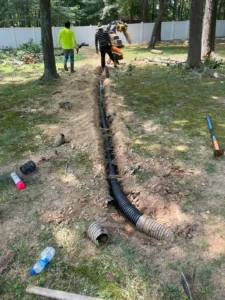
Professional yard drainage solutions are often necessary to correct these conditions and restore healthy growth.
Compacted Soil Prevents Root Growth
Compaction is another common cause of patchy lawns.
In high-traffic areas — or yards with heavy clay — soil becomes dense and hard. This prevents:
- Water from penetrating evenly
- Roots from expanding
- Nutrients from reaching deeper layers
As a result, grass struggles to survive, especially during hot North Carolina summers.
D & L Landscape Pros frequently identifies compaction as a hidden factor when lawns fail in patches rather than uniformly.
Heat Stress in North Carolina Summers
Even well-maintained lawns can struggle during peak summer heat. In South Charlotte and surrounding areas, high temperatures combined with humidity can stress grass quickly.
Common signs of heat-related damage include:
- Brown patches in full sun areas
- Grass that doesn’t recover overnight
- Dry, brittle blades
Heat stress often affects areas with poor soil or shallow roots more severely. That’s why addressing underlying conditions is critical.
Lawn Diseases and Fungal Issues
In humid environments like North Carolina, fungal diseases can spread quickly — especially in lawns that stay moist for extended periods.
Patchy grass may be caused by:
- Brown patch fungus
- Dollar spot
- Other moisture-related diseases
While these issues can look similar to watering problems, they require different treatment approaches.
Proper drainage, airflow, and soil balance help reduce the likelihood of recurring disease.
Pet Damage and Localized Stress
If you have pets, certain areas of your lawn may experience concentrated stress. While you may already be aware of general pet-related lawn issues, damage can also combine with soil and drainage problems to create more severe patching.
Even small stress points can expand if underlying conditions aren’t addressed.
Why Some Patches Keep Coming Back
One of the most frustrating issues homeowners face is recurring dead spots. You reseed or patch the area, it looks better temporarily — and then the problem returns.
This usually happens when:
- The underlying soil hasn’t been corrected
- Drainage issues remain unresolved
- Grading continues to direct water unevenly
Without fixing the root cause, grass will continue to struggle no matter how often it’s replaced.
When Sod Replacement Makes Sense
If large areas of your lawn have died or continue to fail, replacing grass with new sod may be the most effective solution.
However, sod installation should only happen after underlying issues are addressed. Otherwise, new grass will experience the same problems.
Professional sod installation from D & L Landscape Pros ensures:
- Proper soil preparation
- Level grading
- Healthy root establishment
This creates a uniform, long-lasting lawn rather than temporary improvement.
The Role of Grading in Lawn Health
Grading affects more than drainage — it directly impacts how water and nutrients move through your yard.
Improper grading can:
- Starve certain areas of moisture
- Over-saturate others
- Create uneven root conditions
D & L Landscape Pros evaluates slope and elevation as part of every lawn assessment, ensuring water distribution supports healthy growth across the entire yard.
Why Professional Diagnosis Matters
Patchy lawns are rarely caused by a single issue. In many cases, multiple factors — soil, grading, drainage, and compaction — work together.
That’s why guessing or applying one solution at a time often leads to frustration.
D & L Landscape Pros takes a comprehensive approach, identifying all contributing factors before recommending a plan. This ensures the solution addresses the problem completely — not just temporarily.
How to Restore a Healthy, Even Lawn
The right solution depends on your specific yard, but it often includes:
- Correcting grading issues
- Improving drainage
- Addressing soil compaction
- Replacing damaged areas with new sod
By combining these steps, homeowners can achieve consistent growth and eliminate recurring patch problems.
Don’t Let Patchy Grass Get Worse
Dead patches rarely fix themselves. Over time, they can spread, creating larger areas of damaged lawn and increasing maintenance costs.
If your grass is dying in patches despite regular watering, it’s time to look deeper.
D & L Landscape Pros provides expert lawn evaluation, grading, and landscaping services throughout Monroe, South Charlotte, Matthews, Mint Hill, and surrounding areas. Their team understands how North Carolina soil and climate impact lawn health — and how to fix it the right way.
Schedule your free estimate and get a professional assessment of what’s really causing your lawn problems before patchy areas turn into a bigger issue.