If water from your neighbor’s yard is flowing into your property every time it rains, you’re dealing with one of the most frustrating — and common — yard problems in North Carolina. Homeowners across Monroe, South Charlotte, Matthews, and Waxhaw often notice soggy areas, erosion, or pooling water that doesn’t seem to originate from their own property.
If you’ve searched for how to fix water runoff from a neighbor’s yard, you’re not alone. The key is understanding that this isn’t just a surface issue — it’s a grading and water management problem that requires the right solution.
D & L Landscape Pros regularly helps homeowners solve these exact situations by identifying where the water is coming from and designing solutions that protect your yard long-term.
Why Water Runoff From Neighboring Properties Happens
In many neighborhoods, especially newer developments, homes are built close together with shared drainage patterns. That means your yard may sit lower than a neighboring property — or water may naturally flow in your direction.
Common causes include:
- Improper grading during construction
- Neighboring yards sloped toward your property
- Compacted clay soil that prevents absorption
- Downspouts or runoff being directed toward your yard
North Carolina’s clay soil makes this worse. Water doesn’t soak in easily, so instead of absorbing into the ground, it travels across the surface — often ending up in the lowest point, which may be your yard.
Signs Runoff From a Neighbor Is Affecting Your Yard
It’s not always obvious where water is coming from. However, there are clear signs that outside runoff is contributing to your problem:
- Water appears quickly during rain, even before your yard saturates
- Flow lines or channels form across your lawn
- One side of your yard stays consistently wetter than the rest
- Soil or mulch washes in from the property line
- You notice erosion along shared boundaries
In many cases, homeowners first notice this issue when dealing with standing water. If your yard frequently floods, it may relate to problems explained in why does my yard hold water after it rains — but with an external source making things worse.
Why This Problem Shouldn’t Be Ignored
Runoff from a neighbor’s yard isn’t just inconvenient. Over time, it can cause:
- Lawn damage and dead grass
- Soil erosion and uneven ground
- Foundation moisture issues
- Damage to patios and walkways
- Increased mosquito activity
The longer water flows unchecked, the more damage it can cause. That’s why D & L Landscape Pros focuses on long-term solutions rather than temporary fixes.
Step 1: Identify the Direction of Water Flow
Before choosing a solution, it’s important to understand how water is moving.
Water always follows the path of least resistance. If your yard sits lower than your neighbor’s, or if grading directs water toward your property, runoff will continue unless corrected.
Professional evaluation from D & L Landscape Pros looks at:
- Elevation differences between properties
- Existing drainage paths
- Soil conditions and compaction
- How water behaves during heavy rain
This step is critical. Without understanding flow patterns, any solution will likely fail over time.
Step 2: Correct the Grading Where Possible
Grading is one of the most effective ways to redirect water.
If your yard is unintentionally acting as a low point, regrading can help reshape the land so water flows away from vulnerable areas. This doesn’t mean dramatically altering your yard — often, subtle adjustments make a big difference.
D & L Landscape Pros uses grading to:
- Redirect water away from your home
- Eliminate low spots where runoff collects
- Create controlled pathways for water movement
If you’ve already tried adding soil and the issue keeps returning, you may be dealing with a grading problem rather than a surface issue.
Step 3: Install Drainage Solutions to Capture Runoff
In many cases, grading alone isn’t enough — especially when dealing with water coming from outside your property.
That’s where professional yard drainage solutions come in. These systems are designed to capture and redirect water before it causes damage.
Depending on your yard, solutions may include:
- Subsurface drainage systems
- Channel drains along property lines
- Controlled runoff pathways
D & L Landscape Pros designs these systems specifically for North Carolina soil conditions, ensuring they function properly during heavy rain.
Step 4: Prevent Erosion Along Property Lines
Runoff often causes erosion where water enters your yard. This can create trenches, wash away mulch, and destabilize landscaping.
To prevent this, D & L Landscape Pros may incorporate:
- Stabilized soil zones
- Reinforced landscape beds
- Strategic hardscape features
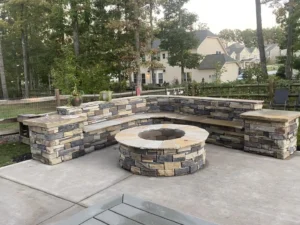
In some cases, elements installed through hardscapes and stonework projects can help control water movement and protect vulnerable areas.
Step 5: Address Downspout and Runoff Sources
Sometimes the problem isn’t just slope — it’s concentrated water discharge.
If a neighbor’s downspout directs water toward your property, it can overwhelm your yard during storms. While you may not control their setup, you can control how your yard handles incoming water.
D & L Landscape Pros evaluates how runoff enters your property and designs solutions to safely redirect it without causing additional issues.
Why DIY Fixes Rarely Work
Homeowners often try quick solutions like:
- Building small berms
- Adding topsoil along the property line
- Digging shallow trenches
While these may temporarily slow water, they rarely solve the problem. In clay soil, water simply finds another path — often creating new issues.
D & L Landscape Pros frequently works with homeowners who tried DIY fixes only to see water return after the next heavy rain.
Professional solutions focus on controlling water flow, not just blocking it.
How Runoff Can Affect Your Entire Landscape
Water doesn’t just impact the area where it enters your yard. Over time, runoff can:
- Create uneven ground
- Damage plant roots
- Shift soil beneath patios
- Increase maintenance needs
If you’ve already noticed uneven areas forming, the issue may connect to broader problems discussed in how to fix uneven ground.
Addressing runoff early helps prevent these secondary issues from developing.
Why Local Experience Matters
Every yard is different, but North Carolina soil and weather create consistent challenges.
Clay soil, heavy rainfall, and neighborhood layouts all influence how water moves between properties. Solutions that work in other regions often fail here.
D & L Landscape Pros understands how Monroe and South Charlotte landscapes behave during storms. Their approach combines grading, drainage, and landscape design to create lasting results.
This local expertise ensures solutions are built for real-world conditions — not just theory.
Protect Your Yard From Outside Runoff
You may not be able to control your neighbor’s yard, but you can control how your property handles incoming water.
With the right combination of grading and drainage, it’s possible to redirect runoff, protect your lawn, and prevent long-term damage.
If water from a neighboring property is affecting your yard, D & L Landscape Pros can evaluate the situation and recommend a solution tailored to your property.
Schedule your free estimate and get expert help from Monroe and South Charlotte’s trusted landscaping professionals before runoff turns into a bigger problem.